Victory! Rider Advocates Could Join the LA Metro Board

Written by Eli Lipmen
July 27, 2026
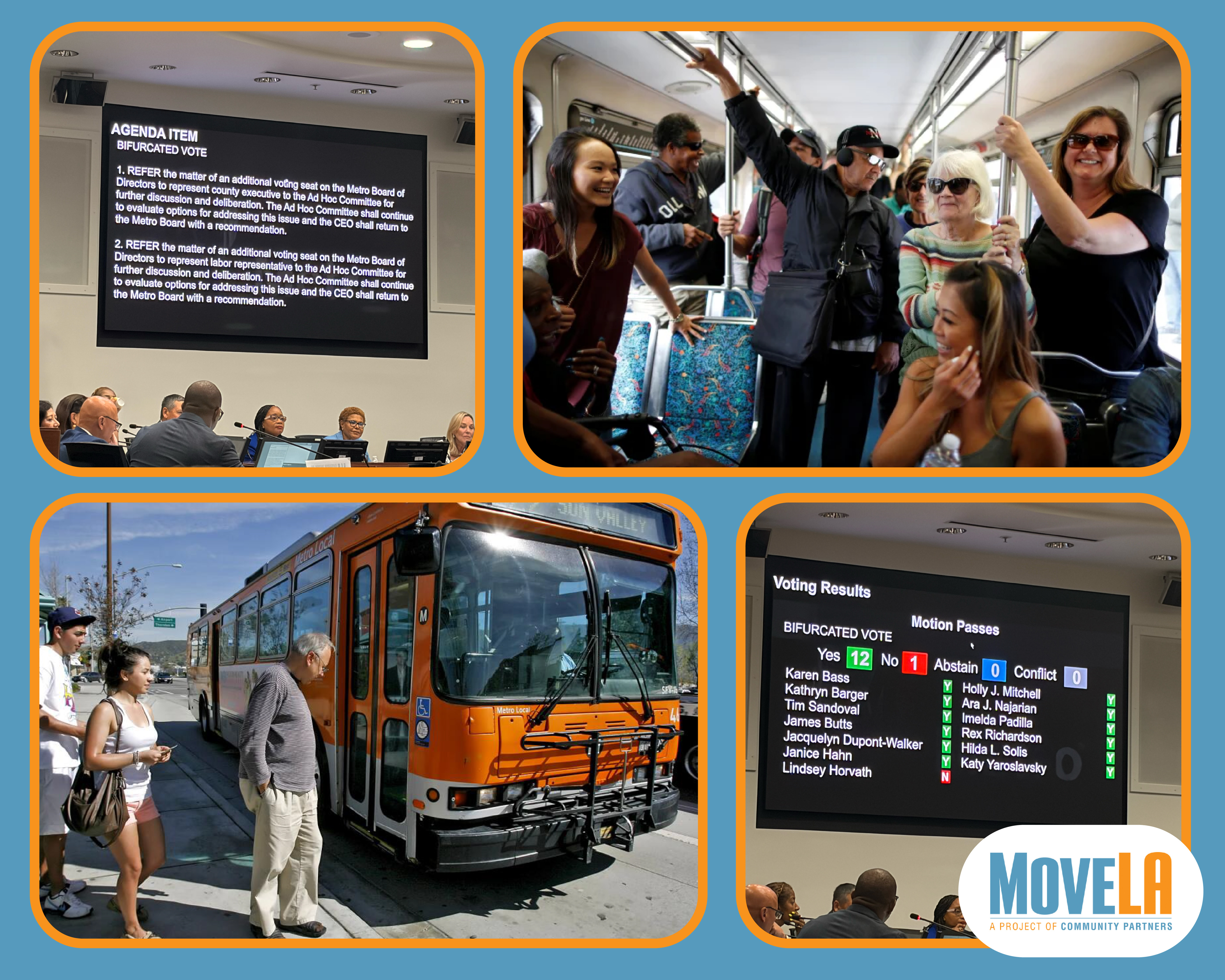
A win for democracy and having regular riders--not just politicians--make decision on how we allocate public resources and improve the rider experience.
We have big news to celebrate this week: creating a more democratic and responsive LA Metro Board that better meets the needs of regular riders—mostly low-income people and people of color who rely on the system to get to work, doctor’s appointments, and school. In a unanimous vote, the Board approved the addition of a seat at their table specifically for a dedicated Metro rider and advocate. Hooray! 🚍🎉
This decision comes after months of deliberation by the Metro Ad Hoc Board Composition Committee, which was established in February of this year to assess Metro’s governance makeup. The committee was created in response to Measure G, an amendment Los Angeles voters passed in 2024 that will expand the LA County Board of Supervisors from five seats to nine by 2032. With the intention of giving county residents a greater voice through smaller districts and other governance modifications, Measure G called for LA Metro to re-evaluate its Board composition and recommend changes to the California Legislature regarding its own governance that would achieve the same effect.
In a fourth-month outreach effort across LA County, Metro asked its riders what needed to change to ensure optimal representation and transit service. As the saying goes, ask, and you shall receive—and receive they did. Through over 1,300 engagement touchpoints and 900 survey responses, one answer overshadowed them all: the longing for a voting Metro Board member who understands the triumphs and tribulations of an everyday transit rider.
Don’t get me wrong, Metro does a pretty good job of listening to their riders; I encourage you to read up on Metro CEO Stephanie Wiggins’ recent Substack post to learn about her view of feedback as a gift during the World Cup transit service. It’s no secret that Metro leaders’ willingness to listen to their riders is a cornerstone behind the organization’s present-day success. However, no amount of emails or 30-second testimonies will replace a vote from someone who’s encountered the system’s weak spots firsthand and will bring their public transit experience.
This exact concern is why transit rider-advocate seats have been added across the nation in places like New Orleans, and productively so! It’s people like Fred Neal Jr., an everyday rider who was appointed to serve on the New Orleans Regional Transit Authority (RTA) Board of Commissioners, who serve as role models for LA Metro’s leadership. As the founder of transit rider advocacy non-profit Ride New Orleans, Neal Jr. used his eight years serving on the New Orleans RTA Board to “[provide] accountability to riders’ needs in a way that [he] could not as a regular commuter.”
“Public institutions that steward taxpayer dollars and provide essential public services are strongest when the people they serve have a meaningful voice in their governance,” said Fred Neal, Jr., in a statement to the Metro Board. “Community representation helps ensure that decisions are informed by lived experience, strengthens public trust, and reinforces the democratic principle that those most affected by public investments should have a role in shaping them.”
Another exemplar for what this new LA Metro board seat can do for transit rider-advocates can be found right here in California’s backyard. Congresswoman Lateefah Simon, California’s 12th Congressional District Representative in the House as of early 2025, served on the BART Board as a loyal transit rider and disability advocate for eight years. As the BART Board President from 2020-2024, Simon spearheaded BART’s Ambassador Program to improve transit rider safety and system accessibility. As a Congresswoman, Simon continues to push for policies that foster California’s transit. Simon’s story beautifully illustrates the pipeline from advocate to legislative changemaker.
Imagine if Metro super transit rider and fan Kenny Uong was a voting Board member? Or Max Romero, the young transit-dependent rider pushing for Bus Rapid Transit and improvements to the Sierra Madre Villa Station? This is how we get the next generation of transit riders and advocates to be Congressional leaders who fight for better service.
In a statement following her authored motion’s approval, Metro Director and LA County Supervisor Janice Hahn rejoiced over “this big step toward making Metro more representative of the people” it serves.
For Metro Chair and LA Mayor Karen Bass, “it is the duty of the LA Metro Board to continue to build out a public transit system that allows Angelenos in every community and people throughout our region to get around without a car.” This motion brings that vision one step closer to life.
As for next steps, LA Metro staff will need to coordinate with the organization’s stakeholder and community advisory groups to devise a plan for selecting who this rider representative will be. Once all loose ends are finalized, board composition modifications will need to be approved by the California Legislature. You can read more about the motion and other tentative changes to Metro’s governance here.
Slowly but surely, Los Angeles is on its way to truly reforming what it looks like to move in the city.